5G EMF Radiation: What It Is, How It Works & How to Protect Yourself (2025)
5G is the most rapidly expanding telecommunications network in history — and also the most misunderstood from an EMF exposure perspective. Misinformation abounds on both sides of the debate: some dismiss all 5G health concerns as conspiracy theory, while others overstate the danger of technology that, in its most common form, is not fundamentally different from 4G LTE. This guide provides a clear, technically accurate explanation of what 5G actually is, how its different frequency bands behave differently, what the current science says about biological effects, and which protection strategies are most effective against real 5G radiation in 2025.
5G Is Not One Thing — It's Three Different Technologies
The most important thing to understand about 5G is that the marketing term "5G" covers three very different frequency bands with entirely different physical properties, propagation characteristics, and exposure profiles. Low-band 5G (600–900 MHz) travels far, penetrates buildings well, and is essentially similar to 4G LTE in its EMF profile. Mid-band / Sub-6GHz 5G (1–6 GHz) is the dominant urban 5G deployment worldwide and produces higher-frequency RF than 4G but behaves similarly in terms of tissue penetration. Millimeter-wave 5G (24–100 GHz) is the genuinely novel frequency band — extremely high-frequency, limited range (200–500m), poor wall penetration, but unprecedented energy density at skin and eye surfaces when exposure occurs.
2G / GSM
850–1900 MHz
Voice + SMS
Well-studied
3G / UMTS
850–2100 MHz
Mobile data
Similar to 2G profile
4G / LTE
700–2600 MHz
Broadband data
Current standard
5G Sub-6
1–6 GHz
Urban broadband
Similar to 4G profile
5G mmWave
24–100 GHz
Ultra-fast, short range
Novel — less studied
What Makes 5G Different From Previous Generations
Beamforming: Targeted High-Intensity Signals
The Key Technical Difference
4G: Omnidirectional broadcast — equal signal in all directions
5G NR: Massive MIMO + beamforming — focused beam aimed at specific devices
Implication: Localised high-intensity exposure to the device being served
Unlike 4G towers which broadcast RF energy equally in all directions, 5G uses Massive MIMO (Multiple Input Multiple Output) arrays with beamforming — the tower identifies where each device is and directs a focused beam of RF energy precisely toward it. This means the person holding the device can receive significantly higher local intensity than someone standing nearby. Conventional RF exposure measurement approaches designed for omnidirectional 4G signals may not accurately capture peak beamformed 5G exposure. This is one reason regulators have been working to update measurement methodologies specifically for 5G NR.
Small Cell Densification: More Antennas, Closer to People
Infrastructure Change
4G: Macro towers every 1–10km — distant, lower local density
5G mmWave: Small cells every 150–500m — mounted at street level
Proximity: Small cells on lamp posts, building facades, bus stops
Millimeter-wave 5G signals cannot travel far and are easily blocked by walls, rain, and even trees. To achieve coverage, operators must install small cell antennas every 150–500 metres — mounted at street furniture height rather than on distant towers. This dramatically increases the density of active RF-transmitting infrastructure in urban environments, with antennas potentially positioned at head height on lamp posts, building facades, bus stops, and utility boxes. While each individual small cell transmits at lower power than a macro tower, the cumulative exposure from multiple nearby small cells at close range is a legitimate area of ongoing research.
Millimeter-Wave Skin Penetration: A Genuinely Novel Concern
Biological Penetration Data
4G (2.6GHz): Penetrates tissue 4–6cm — reaches internal organs
5G Sub-6 (3.5GHz): Penetrates tissue 2–4cm
5G mmWave (24–100GHz): Penetrates only 0.1–1mm — absorbed by skin/eyes
Millimeter-wave radiation (24–100 GHz) penetrates only 0.1–1 millimetre into tissue — it cannot reach deep organs or the brain in the way that lower-frequency RF can. However, this shallow penetration concentrates all the absorbed energy in a very thin surface layer — the skin and the eyes. Research by Betzalel et al. (2018) identified that human sweat ducts, which spiral through the dermis, may act as biological antennas at mmWave frequencies, potentially amplifying localised energy absorption. The eyes have no blood cooling mechanism and are particularly vulnerable to mmWave-induced thermal stress. These concerns are real and under active investigation — not disproven.
What the Science Actually Says About 5G Health Effects
The Honest Scientific Picture in 2025
Sub-6GHz 5G (the dominant form of current 5G deployment) operates in frequency ranges that have been studied extensively as part of 3G and 4G research — the biological effects literature for 1–6 GHz RF is the most developed in the EMF field. Multiple studies have identified biological effects at sub-thermal levels in this range including oxidative stress, DNA strand breaks in cell cultures, and altered gene expression. The International Agency for Research on Cancer (IARC) classified RF-EMF (0–300 GHz) as Group 2B — Possibly Carcinogenic to Humans in 2011, and an updated review process was ongoing as of 2024 with expectations of a possible upgrade.
Millimeter-wave 5G represents a genuinely under-studied area. The available toxicological literature on mmWave frequencies above 24 GHz is thin — most exposure standards were set based on thermal effect models without adequate study of non-thermal biological effects. Independent researchers have called for a precautionary pause on mmWave small cell densification until adequate safety assessment is completed.
5G Frequency Bands: Risk Profile Comparison
| Band | Frequency | Tissue Penetration | Research Status | Current Deployment | Primary Concern |
|---|---|---|---|---|---|
| Low-band 5G | 600–900 MHz | Deep (4–8cm) | Well-studied (same as 4G) | Rural / wide area | Same as 4G LTE |
| Mid-band 5G (Sub-6) | 1–6 GHz | Moderate (2–4cm) | Moderately studied | Urban dominant | Higher density, beamforming |
| mmWave 5G | 24–100 GHz | Skin only (0.1–1mm) | Under-studied | Dense urban (limited) | Skin/eye thermal, sweat ducts |
How to Protect Yourself From 5G Radiation
Use a 5G-Compatible EMF Phone Case
5G Shielding Requirements
Sub-6GHz protection: SafeSleeve, DefenderShield (tested to 6–10GHz)
mmWave protection: Mission Darkness case (tested to 40GHz)
Key spec to check: Upper frequency limit must exceed your carrier's 5G band
Your smartphone is your primary 5G source — it transmits to the network while being held against your body. A verified EMF phone case with a shielding flap between the phone and your body blocks the body-facing emission. For Sub-6GHz 5G protection, cases tested to 10GHz are adequate. For mmWave 5G protection in mmWave-dense deployments (certain US cities, South Korea, Japan), you need a case or pouch tested beyond 24GHz. Always verify the case's tested frequency range against your carrier's specific 5G band before purchasing — a case tested only to 3GHz provides no protection against Sub-6GHz 5G.
Advantages
- Directly shields body from the highest near-field source
- Worn at all times — continuous protection
- Verified lab-tested shielding available
- Same case works for calls, browsing, and pocket storage
Considerations
- Must verify upper frequency limit covers your carrier's 5G band
- Flap must be closed between phone and body to be effective
- Does not address 5G from external tower direction
Install EMF Shielding Curtains on Tower-Facing Windows
Why Windows Are Critical for 5G
Sub-6GHz 5G through glass: 30–70% signal penetration (varies by glazing)
Shielding curtain effectiveness: 25–35dB (99%+ reduction)
Best materials: Swiss Shield, YShield HSF, Naturell fabric
5G Sub-6GHz signals penetrate standard glass reasonably well — windows represent the primary weak point in any home's RF shielding. If you are aware of 5G small cell infrastructure on your street or nearby, use an RF meter to identify which windows receive the highest signal. Installing Swiss Shield or YShield-fabric curtains on these windows reduces incoming 5G RF by 99% or more, while remaining visually similar to standard curtains during the day. For rooms facing known 5G small cells (lamp posts, building facades), this is the most structurally effective and aesthetic shielding solution available to renters and homeowners alike.
Advantages
- Highly effective against external tower signals
- Aesthetically neutral — looks like normal curtains
- No structural modification required
- Covers the full window area — no gaps
- Works for Sub-6GHz 5G and Wi-Fi simultaneously
Considerations
- Must be closed to provide protection
- $100–$300+ per window depending on size
- Requires measuring to identify which windows face sources
Apply EMF Shielding Paint to High-Exposure Exterior Walls
Shielding Paint Performance
YShield HSF54: 35–45dB per coat (sub-6GHz and 5G)
Application: 2 coats on exterior-facing wall + grounding
Coverage: ~20m² per litre
YShield HSF54 shielding paint is effective against Sub-6GHz 5G signals and provides the most permanent and structurally comprehensive shielding solution for walls facing known 5G infrastructure. Applied to the interior surface of an exterior wall facing a 5G small cell or macro tower, two coats can reduce penetrating RF by 99.9%. The wall must be properly grounded via an earthing connection to the mains earth terminal. The dark-coloured shielding paint is then overcoated with standard decorative emulsion. This is the preferred permanent solution for homeowners in mmWave or Sub-6GHz 5G dense urban deployments.
Advantages
- Permanent, wall-level 5G shielding
- Very high attenuation (99.9% with 2 coats)
- Hidden under decorative paint — invisible
- Covers the entire wall area including areas between windows
- Works for all RF including 5G Sub-6
Considerations
- Requires grounding connection
- $80–$120/litre — significant cost for full rooms
- Black paint requires decorative top coat
- Not suitable for renters without landlord permission
Use a Gigahertz Solutions HF-B3G to Map Your 5G Exposure
Why Standard Meters Miss 5G
Standard meters: Often underread beamformed 5G NR signals
HF-B3G: Dedicated 5G NR detection mode for accurate reading
Use case: Identify which rooms and windows receive highest 5G levels
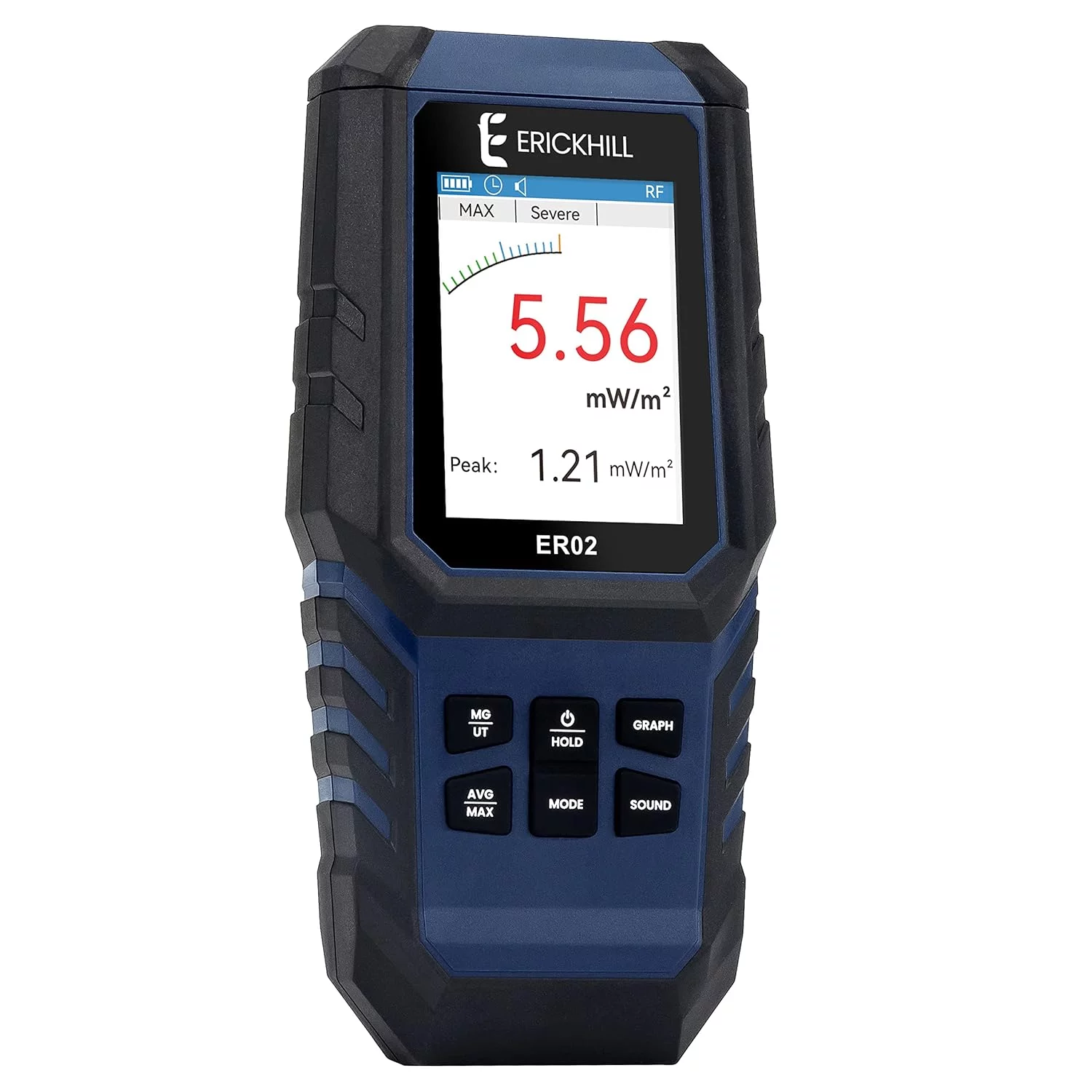
Standard wideband RF meters can significantly underestimate 5G NR (New Radio) exposure because 5G uses dynamic beamforming — the signal is not continuously broadcast but directed in short intense bursts toward active devices. The Gigahertz Solutions HF-B3G has a dedicated 5G NR detection mode that accounts for the bursty nature of beamformed 5G signals, giving more accurate peak and average readings. Before investing in any 5G shielding product, use this meter to map your actual exposure — identifying which rooms, which walls, and which windows receive significant 5G signal from external infrastructure.
Advantages
- Most accurate consumer 5G NR exposure measurement
- Guides targeted shielding investment decisions
- German precision engineering (±3dB accuracy)
- Confirms before/after shielding effectiveness
Considerations
- Premium price (~$450)
- RF only — no ELF measurement
- Requires some technical understanding to interpret
The Most Effective Single Action Against 5G
The most significant source of 5G radiation in most people's lives is not the external tower — it is their own 5G smartphone held against the body. A 5G phone transmitting to a nearby small cell at close body contact produces far higher local exposure than passing a street-level 5G antenna. Keeping your phone away from the body using a verified EMF case, a Faraday bag when not in use, and wired headphones for calls — these three habits address your primary personal 5G exposure source more effectively than any structural shielding solution.
5G Protection: Priority Action Plan
Step-by-Step 5G Protection Strategy
Identify Your Local 5G Infrastructure
Use your country's telecoms regulator database (Ofcom in the UK, FCC in the US) or a site like MASTDATA or CellMapper to identify 5G base stations within 500m of your home. This tells you which frequencies are deployed locally and which walls and windows face the highest-density infrastructure.
Measure With a 5G-Capable Meter
Use a Gigahertz Solutions HF-B3G or Cornet ED88TPlus (8GHz ceiling) to map your home's 5G exposure. Record readings at each window and exterior wall. Establish which rooms have highest external 5G penetration before spending on shielding.
Address Your Phone First
Use a verified 5G EMF phone case with a shielding flap, and use wired or air-tube headphones for calls. Store the phone in a Faraday bag when not actively using it. These habits address your highest personal 5G exposure source immediately.
Shield High-Exposure Windows and Walls
Based on your meter survey, prioritise shielding curtains for windows facing known 5G infrastructure, and shielding paint for walls with highest penetrating RF. Address the bedroom first — this is where sustained overnight exposure occurs.
Re-Test After Infrastructure Changes
5G network rollout is ongoing. Small cells are being added continuously in urban environments. Re-survey your home with your RF meter every 6–12 months to detect new sources and verify your existing shielding remains adequate as the network density increases around you.
5G Protection Effectiveness by Strategy
Conclusion: A Measured, Evidence-Based Approach to 5G
5G is neither as safe as industry proponents claim nor as catastrophic as the most alarming online narratives suggest. The honest position is that Sub-6GHz 5G sits within an existing body of RF-EMF research that justifies precautionary action, while mmWave 5G represents a genuinely novel exposure that requires significantly more independent safety research before confident reassurance can be given.
The practical approach: address your own phone as your primary 5G source, measure your home to identify external tower contribution, and apply targeted shielding to the highest-exposure rooms and surfaces. Use the same evidence-based tools — meters, verified shielding products, and measurable reductions — that have been validated for lower-frequency RF, applied specifically to the 5G frequency bands relevant in your location.
The Case for Faster Independent Safety Research
Over 400 scientists and medical professionals have signed the International EMF Scientist Appeal, calling on the WHO, UN, and national governments to update EMF exposure guidelines, fund independent (non-industry) research into biological effects of 5G, and apply the precautionary principle to 5G mmWave rollout. The appeal specifically highlights that current ICNIRP guidelines do not adequately address non-thermal biological effects — the mechanisms most relevant to chronic low-level exposure from 5G infrastructure.