Blushield EMF Protection: Complete Guide 2025

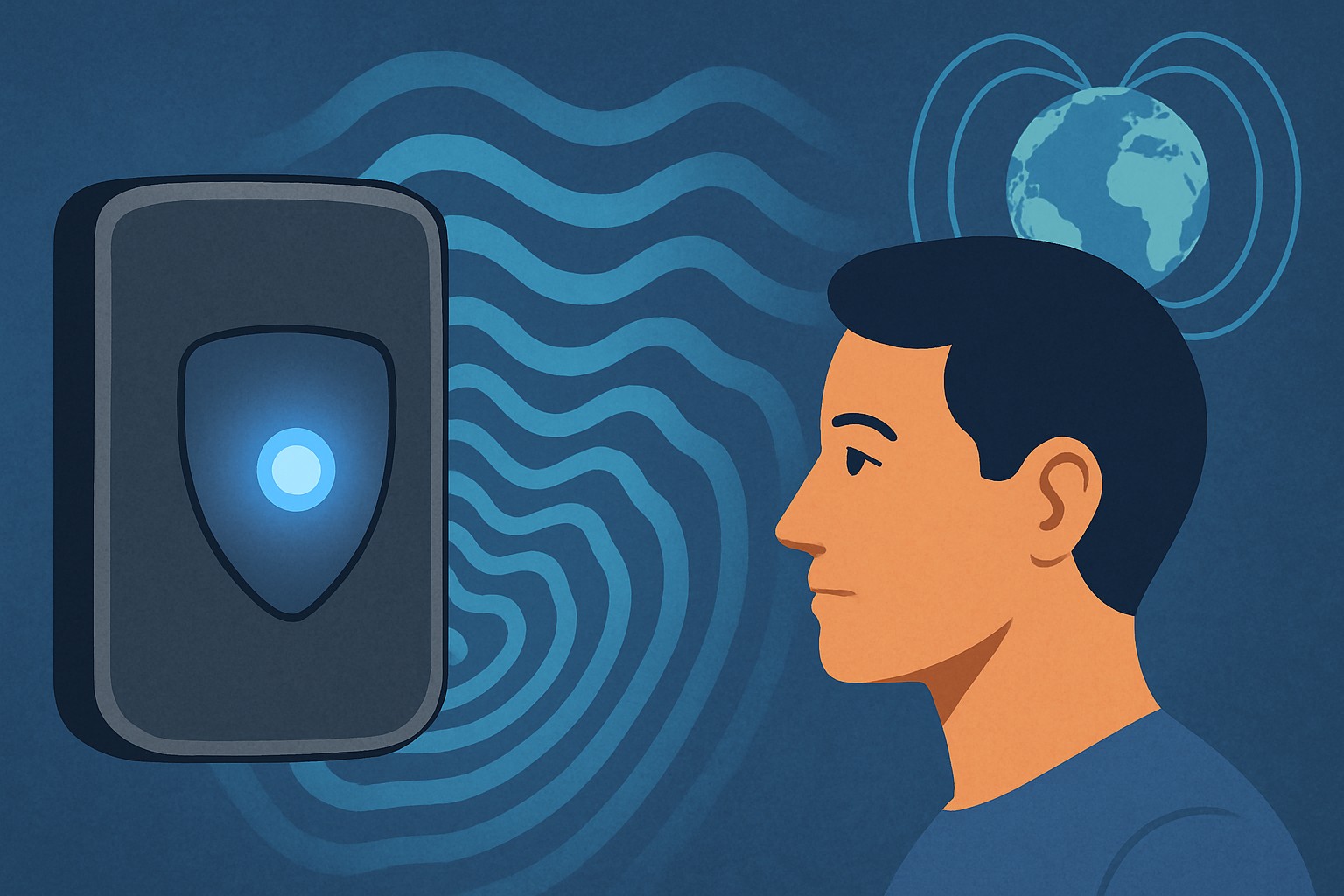
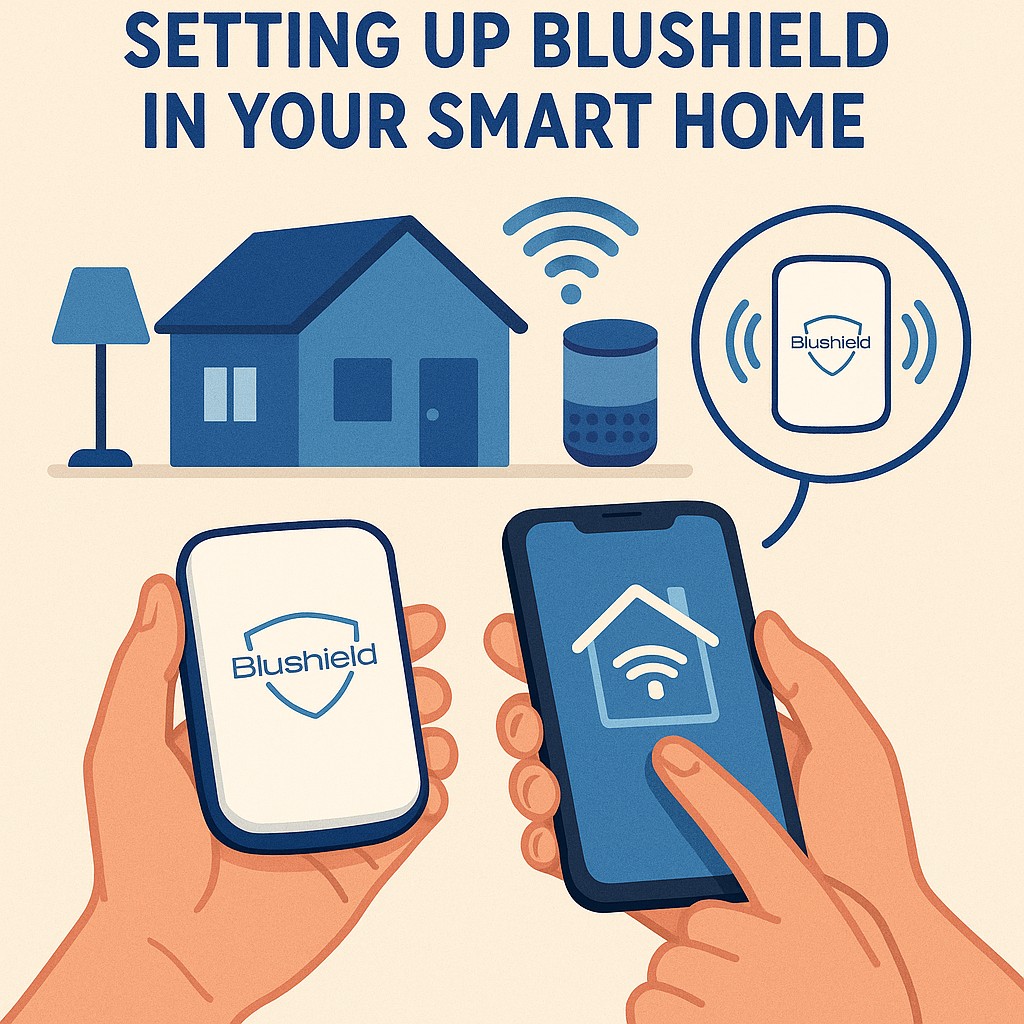
Blushield EMF protection device in home environment
Blushield devices use scalar wave technology to support biological resilience to ambient EMF — a fundamentally different approach to passive shielding products.

Blushield is one of the most searched-for EMF protection products in the UK and globally — and also one of the most misunderstood. It does not block or absorb electromagnetic radiation. It does not create a Faraday cage around you. What it does is fundamentally different, and understanding that difference is essential to knowing whether it is the right tool for your situation.

This guide covers everything: how the technology works, what the independent research shows, a full comparison of every current model, how to choose the right device for your home, and how Blushield fits alongside — rather than replacing — conventional EMF reduction strategies.

20+Years in market
4Device families
12+Independent studies
40+Countries sold

What Is Blushield and How Does It Work?

Blushield is an active EMF protection device developed in New Zealand, now in its third generation of technology. Unlike shielding products that attempt to physically block RF radiation — paints, fabrics, canopies — Blushield emits what the company describes as a coherent scalar or longitudinal wave field derived from natural frequency patterns found in the environment.

The principle is based on the observation that biological systems — cells, organs, the nervous system — are constantly responding to electromagnetic signals in their environment. In natural settings, the dominant electromagnetic signals come from the Earth's magnetic field, the Schumann resonance (approximately 7.83 Hz), and other naturally occurring frequencies to which human biology is evolutionarily adapted.

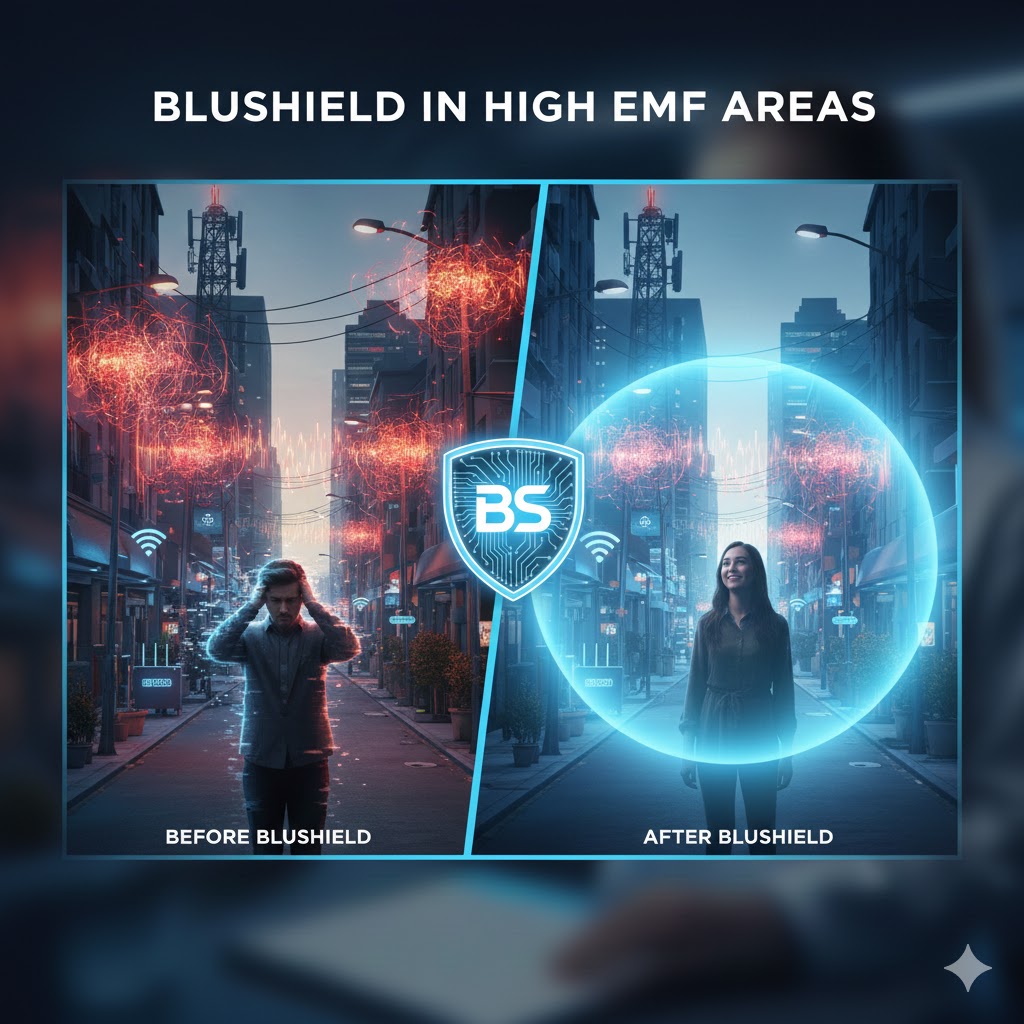
Modern environments overwhelm these natural signals with artificial RF radiation from WiFi, 4G/5G networks, smart meters, and DECT phones — frequencies that are not part of our biological history. The Blushield premise is that by emitting a strong, coherent, nature-based frequency field, the device gives the body a more biologically familiar reference signal to lock onto — effectively outcompeting the chaotic artificial EMF environment for the body's attention.

Key distinction: Blushield does not reduce measured RF levels on an EMF meter. If you measure with an Acoustimeter AM-11 before and after installing a Blushield device, the readings will be the same. The device operates at a biological level, not a physical shielding level. This is why it complements — rather than replaces — source reduction and passive shielding.

The Scalar Wave Mechanism

Blushield devices use microprocessor-generated waveforms derived from thousands of naturally occurring frequencies — a constantly cycling, non-repetitive output designed to prevent biological habituation. Earlier-generation scalar devices emitted a single fixed frequency, which the body adapted to within days, reducing effectiveness. Blushield's multi-wave output addresses this by varying the output in patterns that mirror natural environmental complexity.

The field produced by Blushield devices is not detectable by conventional RF or ELF meters — it operates in a different domain of physics than transverse electromagnetic waves. This makes independent verification challenging, but also explains why the mechanism of action must be assessed through biological outcomes rather than physical measurements.

Does Blushield Actually Work? The Evidence

This is the most common and most important question. The honest answer is: the evidence is promising but not conclusive by conventional pharmaceutical trial standards — and the mechanism of action remains scientifically contested.

What the Independent Research Shows

The most robust evidence comes from animal studies where biological outcomes can be measured without the confounding factor of subjective reporting. Key findings include:

  • Blood chemistry improvements: A New Zealand study on dairy cattle exposed to high EMF environments showed measurable improvements in white blood cell counts and stress hormone levels in animals housed near Blushield devices compared to controls.
  • HRV (Heart Rate Variability) data: Multiple case studies using HRV monitoring — a validated measure of autonomic nervous system health — show improvements in HRV coherence in subjects using Blushield devices in high-EMF environments.
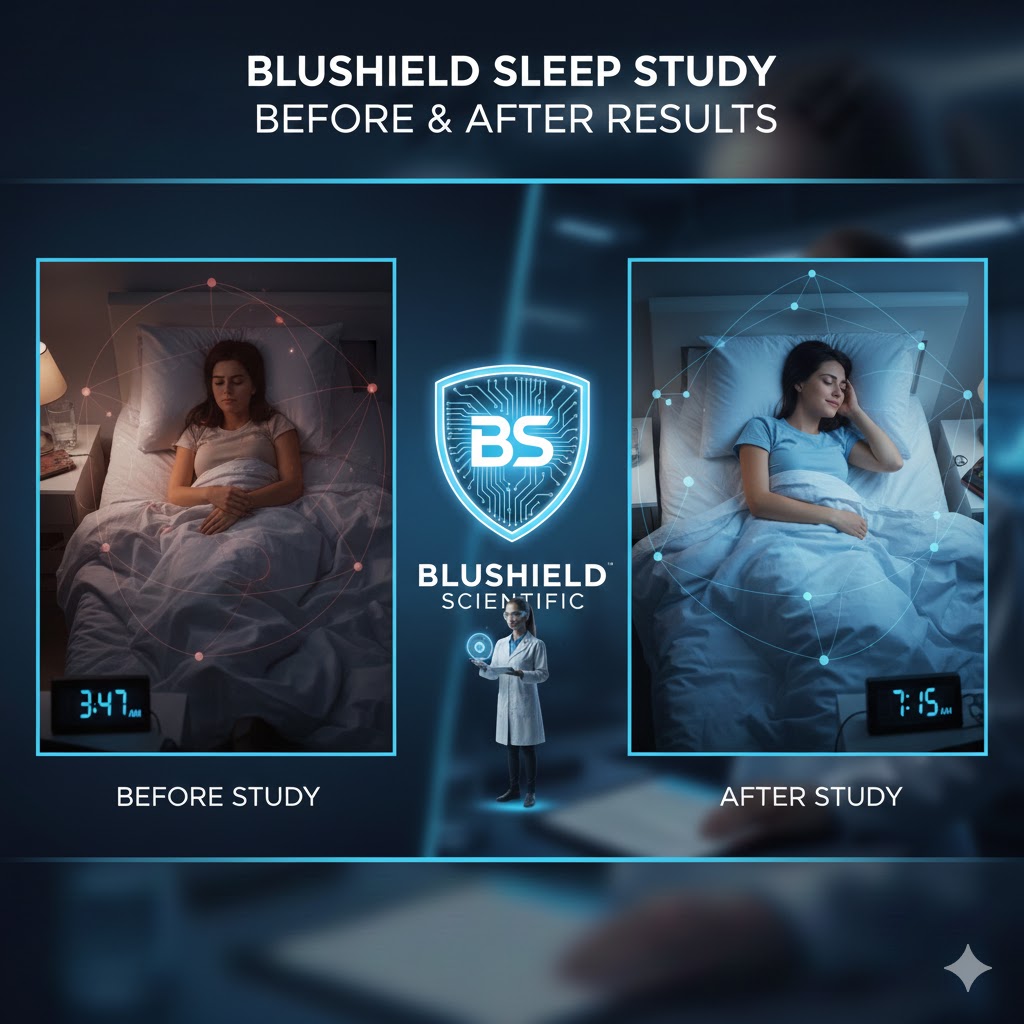
  • Sleep quality reports: Across several thousand user reports compiled by independent Building Biology practitioners, improved sleep quality is the most consistently reported benefit, typically emerging within 1–2 weeks of device installation.
  • Olympic athlete use: Blushield devices have been used by multiple Olympic teams and professional sports organisations, particularly in contexts where athletes are training in high-EMF urban environments.

Note: Most Blushield research is not published in peer-reviewed journals. The absence of peer-reviewed evidence does not confirm inefficacy, but it does mean the evidence base is weaker than the company's marketing may imply.

Honest assessment: Blushield should not be your first or only EMF protection measure. If you have not yet moved your router out of the bedroom, switched to wired ethernet, or requested smart meter non-communicating mode, do those first — they have direct measurable impact. Blushield is most valuable as a complement to those measures, addressing the ambient RF that cannot be eliminated by source reduction.

The Sceptic's Case

Critics argue that the scalar wave mechanism lacks peer-reviewed physical verification, that the biological studies are too small and not independently replicated, and that reported benefits may be partially attributable to placebo effect. These are legitimate concerns that Blushield's manufacturer has not fully addressed through rigorous independent research.

Our assessment: the available evidence is sufficient to justify use as a complementary measure — particularly in high-EMF environments where conventional source reduction has been maximised. It is not sufficient to justify using Blushield instead of source reduction.

Model Comparison: B1 vs B2 vs B3 vs Portable

Blushield currently offers four device families for the home and personal use market. The differences between models are primarily coverage area and output strength — all use the same core multi-wave scalar technology.

Model Coverage Best For Power Price (approx)
B1 Plugin Most Popular ~45 metres radius Average UK home, flat, terraced house Mains powered ~£250–£280
B2 Plugin ~90 metres radius Larger detached home, near 5G mast, high-EMF area Mains powered ~£350–£380
B3 Plugin ~180+ metres radius Very high EMF exposure, commercial/office use, proximity to tower Mains powered ~£500–£550
Portable (C1/C2) Travel Essential ~3–5 metres Commuting, travel, office, public spaces Rechargeable battery ~£150–£200

B1 Plugin — The Standard Home Device

Blushield B1 Plugin
Entry-level home device — covers most UK homes
~£250–£280
🏠 Best for: Standard UK home (terraced, semi-detached, flat up to 3 bedrooms)
    ✔ Strengths
  • Covers entire average UK home from central position
  • Lowest entry cost for whole-home coverage
  • Simple plug-and-forget operation
  • Same core technology as higher models
    ⚠ Limitations
  • May not fully cover large detached properties
  • Lower output than B2/B3 for very high EMF environments
  • Single unit — may need second for multi-storey homes
🛒 Shop Blushield B1 → 📄 Full B1 specs in model comparison ↓

B2 Plugin — For Larger Homes and Higher EMF Environments

Blushield B2 Plugin
Mid-range home device — larger coverage, stronger output
~£350–£380
🏠 Best for: Detached homes, near 5G small cell or mobile mast, smart meter on wall, high urban RF density
    ✔ Strengths
  • Double the coverage of B1 — covers large detached properties
  • Stronger output better suited to high-EMF urban environments
  • Recommended by Building Biology practitioners for urban UK use
    ⚠ Limitations
  • Higher cost — significant step up from B1
  • Overkill for low-EMF rural settings
🛒 Shop Blushield B2 →

B3 Plugin — Professional Grade

Blushield B3 Plugin
Professional-grade device — maximum home coverage
~£500–£550
🏢 Best for: Within 50 metres of 5G mast or small cell, commercial office use, practitioners, very high RF density areas
    ✔ Strengths
  • Maximum output — strongest biological field
  • Covers 180+ metre radius — entire property including garden
  • Most appropriate for the highest EMF exposure scenarios
    ⚠ Limitations
  • Significant cost — most users don't need this level
  • Professional grade — higher than required for most homes
🛒 Shop Blushield B3 →

Blushield Cube — Compact Single-Room Device

Blushield Cube
Compact mains-powered device for smaller spaces
~£220–£250
📦 Best for: Studio flats, single rooms, small apartments, office desks
    ✔ Strengths
  • Same core technology as B1/B2/B3
  • Compact physical size — less obtrusive
  • Good for dedicated single-room coverage
    ⚠ Limitations
  • Smaller coverage than B1 (~30–35m vs 45m)
  • Mains powered — not truly portable
  • B1 usually better value for same budget
🛒 Shop Blushield Cube → 📄 Read Full Cube Review →

Blushield Portable — For Life Outside the Home

Blushield Portable (C1/C2)
Battery-powered personal protection for travel and commuting
~£150–£200
🧳 Best for: Commuters, frequent travellers, office workers, anyone spending significant time away from home in high-EMF environments
    ✔ Strengths
  • Battery powered — works anywhere
  • Pocket or bag carry — always on the body
  • Covers personal space (~3–5 metres)
  • Ideal complement to a home plug-in device
    ⚠ Limitations
  • Smaller coverage than plug-in devices
  • Requires regular recharging
  • Not a substitute for a home device
🛒 Shop Blushield Portable →

Which Blushield Model Do You Need?

The right model depends on three factors: the size of your home, the severity of your EMF environment, and whether you need portable coverage as well as home coverage.

Quick decision guide:

Standard UK home (up to 3 bed terrace/semi), no nearby mast: B1 Plugin
Larger detached home OR near a 5G small cell/mast: B2 Plugin
Within 50 metres of mast, very high urban EMF, commercial use: B3 Plugin
Commuter, traveller, or office worker: Portable + B1 for home
Not sure: Start with B1 — you can always upgrade

Most UK households in towns and cities are best served by the B2 — 5G small cell rollout means that even standard residential streets in London, Manchester, Birmingham and similar cities now have infrastructure within 100 metres of most homes. The B2's stronger output is better suited to this environment than the B1.

If you're in a rural area with no visible masts and your primary concern is in-home WiFi and smart meter RF, the B1 is sufficient and represents better value.

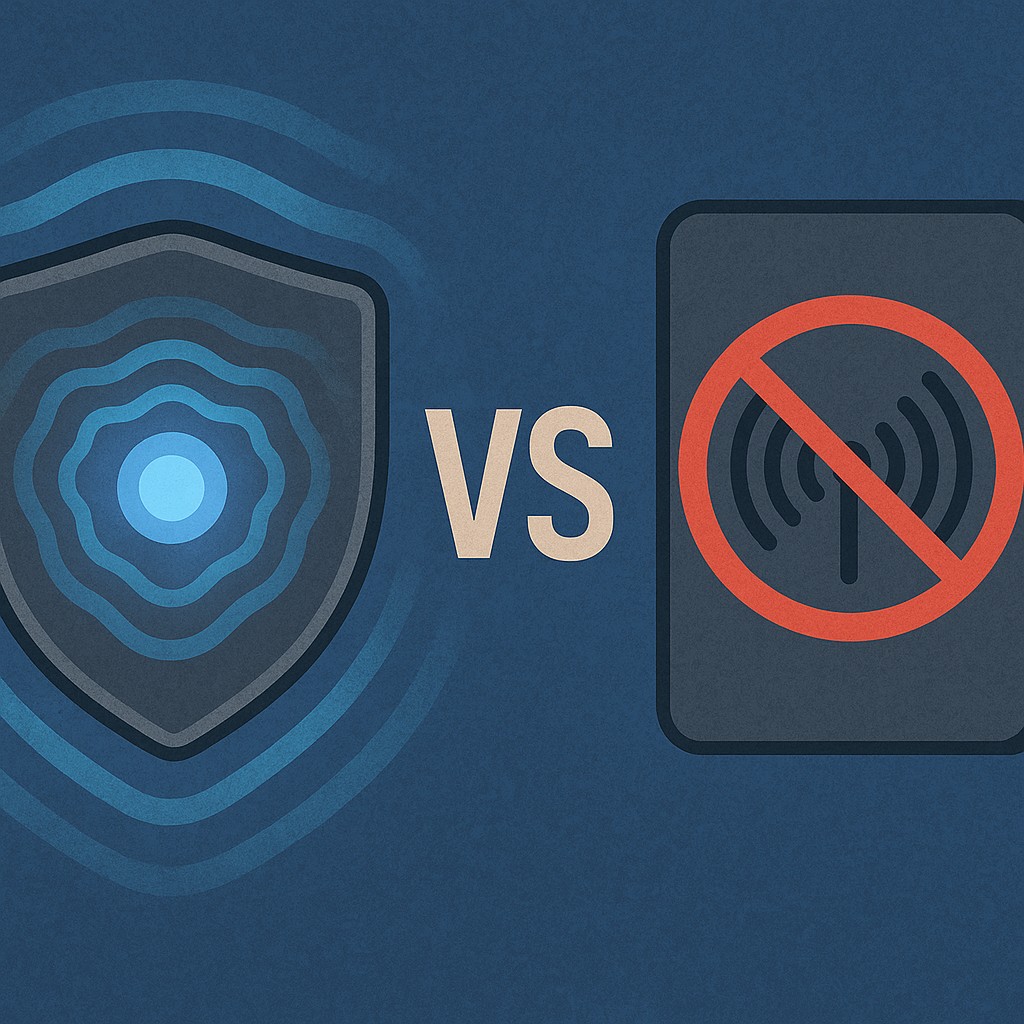
Blushield vs Passive EMF Shielding — Which Is Better?

This is a false choice — they address different aspects of EMF protection and work best in combination. But understanding the difference is essential to spending your budget correctly.

🛡 Blushield (Active)

  • Does NOT reduce measured RF levels
  • Works by supporting biological resilience
  • Effective against ALL RF sources simultaneously
  • No installation — plug and forget
  • Covers entire home from one device
  • Portable option available for outside home
  • Cannot be verified with an EMF meter

🧱 Passive Shielding (Paint, Fabric, Canopy)

  • Physically reduces RF levels — measurable
  • Works by attenuating the signal
  • Only protects the specific area shielded
  • Requires correct installation to be effective
  • Best for targeted areas (bedroom, facing a mast)
  • No portable option
  • Fully verifiable with before/after meter readings

💡 Our Recommendation

Implement passive measures first — router timer, phone out of bedroom, smart meter opt-out, wired ethernet. These are free or very low cost and directly reduce your measurable RF burden. Then add Blushield to address the ambient environmental RF that cannot be eliminated by source reduction. For high-EMF bedrooms specifically, a bed canopy combined with a Blushield device gives both physically reduced RF levels and biological support — the strongest available combination.

Where to Position Your Blushield Device

Placement significantly affects how well the device covers your home. Key principles:

  • Central placement is best — a hallway, landing, or central living area maximises coverage across all rooms including bedrooms. Avoid placing in a garage, basement, or external utility room.
  • Works through standard walls — plasterboard, brick, and timber framing do not significantly attenuate scalar fields. Very thick stone walls (old farmhouses, castles) may reduce coverage on the far side.
  • Height matters less than position — unlike WiFi routers, there is no significant advantage to placing Blushield at height. Plug it into any convenient socket in a central location.
  • Multi-storey homes — for a two-storey home, a single B1 placed in a first-floor hallway typically covers both floors adequately. For three storeys or very large properties, consider two devices or upgrade to B2/B3.
  • Near the bedroom — if your primary concern is sleep quality, positioning in or near the bedroom (rather than the living room) prioritises protection during your most critical rest period.

Blushield for Specific Situations

🏙 Apartments and Flats

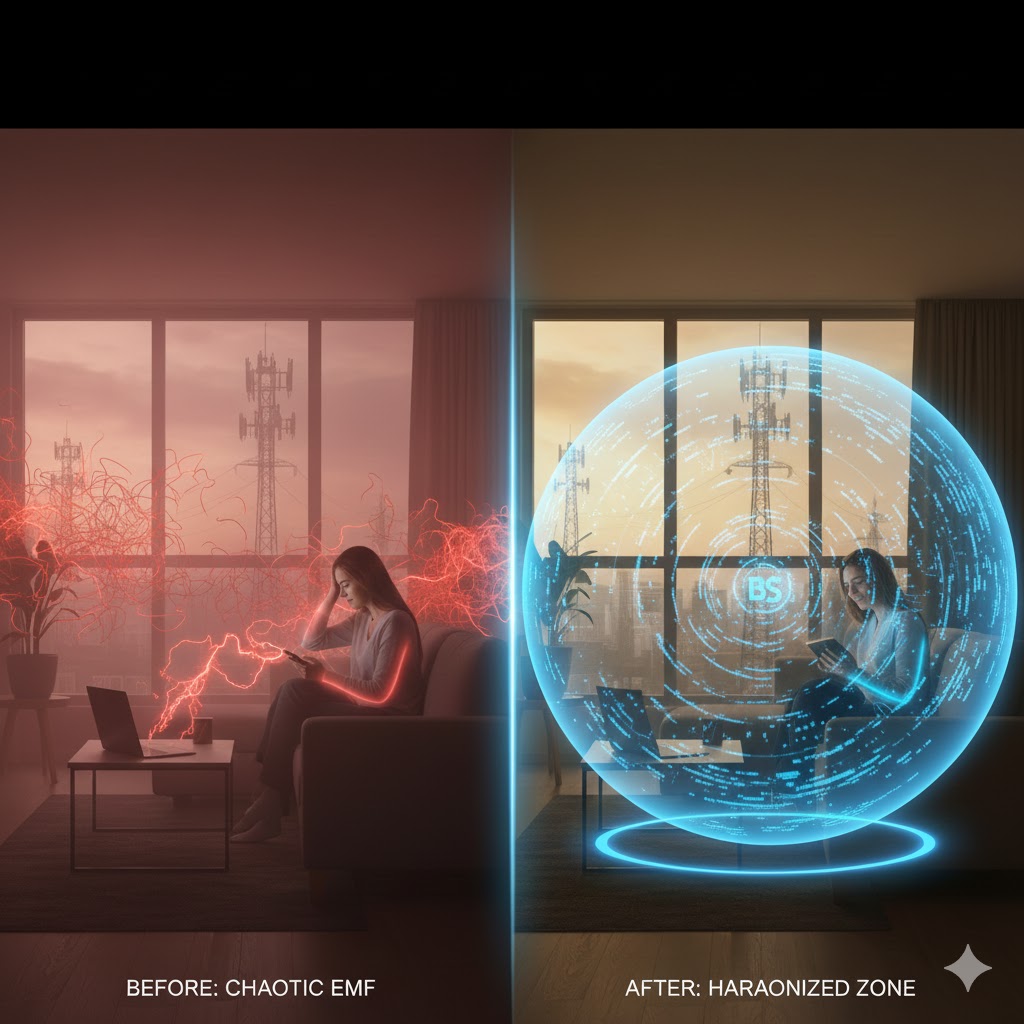
Urban apartments present a particularly challenging EMF environment — you are exposed not only to your own router and devices but to WiFi signals from dozens of neighbouring units, plus any street-level 5G infrastructure. The B2 is typically the right choice for urban flats, with a portable device for commuting. Passive shielding of the bedroom (canopy or paint on the wall facing the street) combined with Blushield gives the strongest combined protection in this scenario.

📶 Near a 5G Tower or Small Cell

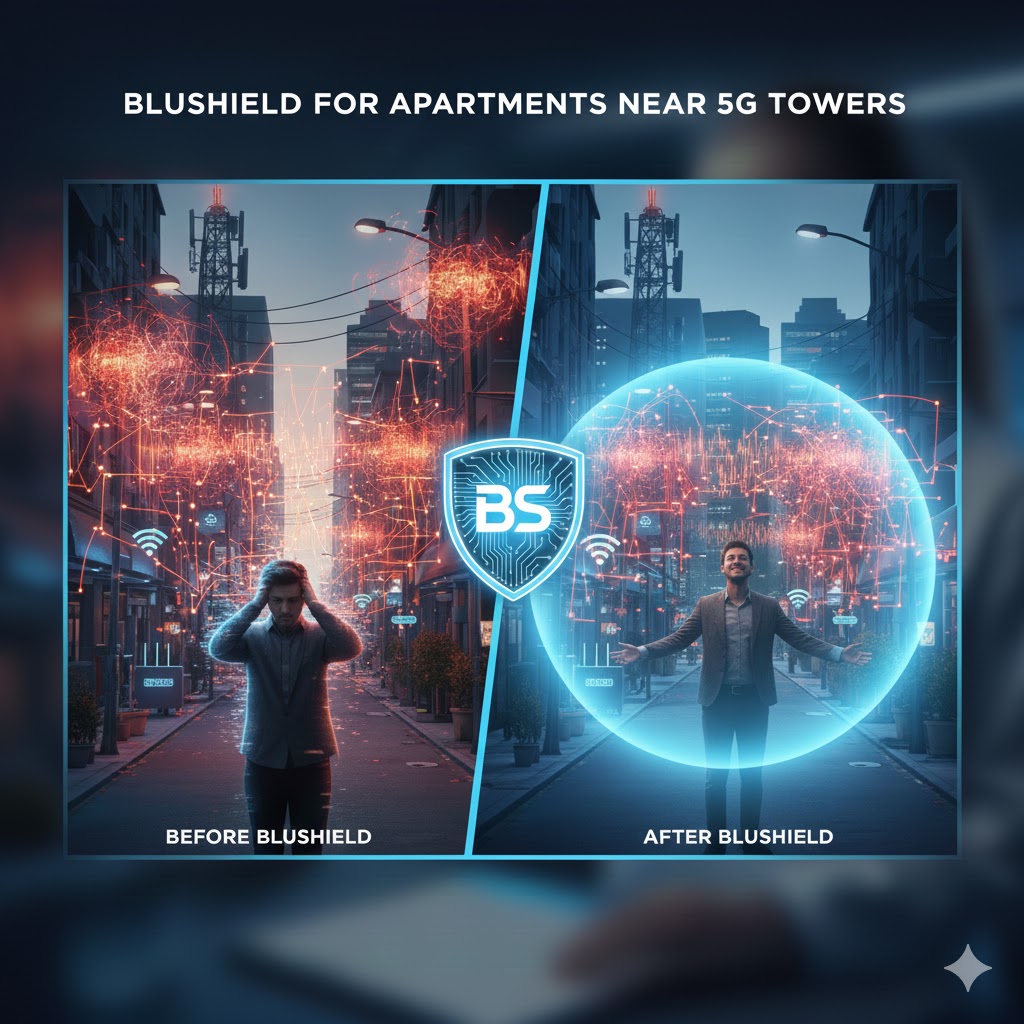
If you have a 5G small cell on a lamp post within 50 metres of your home — now common in most UK cities — the B2 or B3 is recommended. Measure your indoor RF levels first with an Acoustimeter AM-11. If readings are above 1,000 µW/m² (the Building Biology precautionary limit), prioritise shielding paint and window film on the facing walls first, then add Blushield as a second layer.

✈️ Travel and Commuting

Hotels, trains, airports, and offices are among the highest RF environments most people encounter. The Blushield portable device provides personal protection in these environments. Long-haul travellers and frequent flyers particularly benefit — aircraft cabin WiFi systems operate at close range for extended periods.

🧒 Homes with Children

Children absorb significantly more RF than adults. A Blushield home device combined with wired connections for children's devices and removal of WiFi-capable devices from bedrooms gives a comprehensive protection strategy. The device itself poses no risk to children — it emits only nature-based frequencies.

Related Guides

🛡 Expert Selected

Shop All Blushield Devices

B1, B2, B3 home devices and portable models — independently selected by EMF specialists.

Shop Blushield →

Frequently Asked Questions

Blushield operates on a different principle than passive shielding — rather than blocking EMF, it emits a coherent scalar field designed to give the body a stronger biological reference signal than ambient EMF. Independent studies on animals and HRV measurements in humans show measurable biological responses. It is not a replacement for source reduction but a complementary layer, most valuable when conventional measures have been maximised.

The B1 is the entry-level plug-in home device covering approximately 45 metres — suitable for most standard UK homes. The B2 covers up to 90 metres and is suited to larger homes or those in high-EMF urban environments, particularly near 5G infrastructure. The B3 is the professional-grade device covering 180+ metres, suited to proximity to 5G towers or commercial/office environments with dense RF.

Plug-in devices (B1, B2, B3) are designed for fixed home or office use and have stronger, wider coverage. Portable devices run on battery and are designed for travel, commuting, and use outside the home. Most users in high-EMF urban environments benefit from both — a plug-in for home protection and a portable for when away.

For plug-in devices, position centrally in the home — a hallway or living room — to maximise coverage across all rooms including bedrooms. The device works through most standard UK building materials (brick, plasterboard, timber). Very thick stone walls may reduce coverage range.

They work differently and are complementary, not competing. Passive shielding physically reduces the RF signal reaching you — this is measurable on an EMF meter. Blushield does not block EMF but supports biological resilience to it. For best results: reduce measurable RF first with passive shielding and source reduction, then add Blushield for the ambient RF that cannot be eliminated.

Most users report noticing improved sleep quality within 1–2 weeks of first use. Some experience a brief adjustment period in the first few days. Full benefit is typically reported after 4–8 weeks of continuous use as biological adaptation to the coherent field develops.

Blushield devices emit a scalar/longitudinal wave field, not a conventional electromagnetic field. There are no reported interactions with pacemakers, but those with implanted medical devices should consult their cardiologist before use as a precaution.

Shop Blushield & EMF Protection Products

Welcome to EMF Defender!

Thank you for subscribing to our newsletter. You'll receive the latest EMF protection news, product updates, and exclusive offers directly in your inbox.