Acoustimeter AM-11 Specifications: Full Technical Specs, Features & Honest Review
The Acoustimeter AM-11 is widely regarded as one of the most reliable consumer-grade RF meters available — recommended by Building Biology practitioners, independent EMF researchers, and the team here at EMF Defender. It was designed by Dr Alasdair Philips, founder of Powerwatch and one of the UK's most respected independent EMF researchers. If you are researching the AM-11 before purchase, this page gives you every technical specification you need, a clear explanation of what each spec means in practice, an honest assessment of its limitations, and a direct comparison with the previous AM-10 model.
📡 Recommended RF Meter
Browse EMF Meters Including the Acoustimeter AM-11
Compare the AM-11 alongside other expert-selected RF meters for home testing — with independent attenuation data and buying guidance.
Quick Specifications At a Glance
Full Technical Specifications
| Acoustimeter AM-11 — Complete Specification Table | |
|---|---|
| Frequency Range | 200 MHz – 8 GHz |
| Measurement Type | RF / microwave radiation (electric field strength and power density) |
| Display — Primary | Dual LED bar graph (16 LEDs): separate Peak and Average columns displayed simultaneously |
| Display — Secondary | Digital LCD showing V/m and µW/m² readings with peak-hold function |
| Measurement Units | V/m (volts per metre) and µW/m² (microwatts per square metre) |
| Minimum Detectable Level | 0.001 V/m (approx. 0.003 µW/m²) |
| Maximum Display Level | 6 V/m (approx. 100 µW/m²) |
| Accuracy | ±6 dB across full frequency range (typical ±3 dB at 2.45 GHz) |
| Response Time — Peak | Captures pulses as short as 1 millisecond |
| Response Time — Average | Approximately 1 second rolling average |
| Audio Output | 3.5mm headphone socket — demodulated audio of detected signal (allows auditory identification of source type) |
| Speaker | Built-in speaker with volume control |
| Antenna | Internal broadband isotropic antenna (omni-directional, responds to all polarisations) |
| Battery | 3 × AA alkaline batteries |
| Battery Life | Approximately 20 hours continuous use |
| Auto Power Off | Yes — after approximately 10 minutes of inactivity (can be disabled) |
| Dimensions | Approximately 155 mm × 70 mm × 28 mm |
| Weight | Approximately 200 g (including batteries) |
| Operating Temperature | 0°C to 40°C |
| ELF Measurement | Not included — RF only |
| Magnetic Field Measurement | Not included |
| Data Logging | Not included |
| PC / USB Connection | Not included |
| Country of Origin | United Kingdom |
| Designer | Dr Alasdair Philips, Powerwatch (UK) |
| Compliance / Calibration | Factory calibrated; calibration service available from manufacturer |
What Each Key Specification Means in Practice
Frequency Range: 200 MHz – 8 GHz
This is the most important specification for determining what the AM-11 can and cannot detect. The range covers every major domestic RF radiation source except millimetre wave 5G (mmWave, 24–100GHz, which is only deployed in specific dense urban hotspot environments in the UK). In practice, the AM-11 will detect:
- WiFi 2.4GHz and 5GHz — both domestic and public hotspots
- 4G/LTE — 700MHz to 2.6GHz bands
- 5G sub-6GHz — 3.4GHz to 3.8GHz (the primary UK 5G deployment band)
- Smart meters — 868MHz (WAN) and 2.4GHz (HAN/Zigbee)
- DECT cordless phones and baby monitors — 1.88GHz to 1.90GHz
- Bluetooth — 2.4GHz
- Microwave oven leakage — 2.45GHz
- 3G — 850MHz to 2.1GHz
What the AM-11 Does NOT Detect
- Millimetre wave 5G (mmWave) — frequencies above 8GHz are outside the detection range. mmWave 5G is not yet widely deployed in UK residential areas.
- ELF magnetic fields — from power lines, appliances, wiring, and transformers. A separate gaussmeter is needed.
- Electric fields (ELF) — from mains wiring. Requires an ELF electric field meter.
- AM/FM radio — below 200MHz lower limit. Not a significant health concern at typical levels.
Dual Bar Graph: Why Peak AND Average Matter
The AM-11's dual LED bar graph — showing Peak and Average simultaneously — is one of its most practically important features. Many cheaper meters show only an average or RMS reading. Smart meters, DECT phones, WiFi routers, and 4G base stations all transmit in short, intense bursts (pulsed radiation). An average-only reading misses the peak levels entirely — a smart meter sending a brief high-power burst every 30 seconds would read near zero on average, but show a high peak. The AM-11's peak-hold display captures these instantaneous pulses, which independent researchers consider more biologically relevant than time-averaged levels.
Audio Output: Identifying Source Type by Sound
The 3.5mm audio output demodulates the detected RF signal and outputs it as audible sound. Different radiation sources have characteristic sounds: WiFi produces a rapid chattering sound; smart meters produce intermittent loud bursts; DECT phone base stations produce a regular ticking even at standby; 4G produces a distinctive noise pattern. This audio signature capability allows experienced users to identify the type of source from a reading — not just the level. It is particularly useful when trying to locate and identify an unknown source in a room.
Accuracy: ±6 dB Across Range
±6 dB means the reading could be up to 4× higher or 4× lower than the true value at the extremes of the frequency range. At the centre frequencies where the antenna is most efficient (around 1–3GHz), accuracy is typically ±3 dB or better. This level of accuracy is appropriate for Building Biology assessments and exposure mapping — it is not a laboratory-grade calibrated instrument, but it is significantly more accurate than inexpensive consumer meters that may be off by 10–20× at certain frequencies. For reference, the Building Biology threshold bands span orders of magnitude, so ±6 dB accuracy is entirely sufficient for determining which exposure band applies.
Acoustimeter AM-11 vs AM-10: What Changed?
The AM-10 was the previous generation Acoustimeter, still widely available second-hand and sometimes sold as new old stock. If you are deciding between the two, here is a precise breakdown of the differences:
| Specification | AM-10 | AM-11 | Verdict |
|---|---|---|---|
| Frequency Range | 200 MHz – 3.5 GHz | 200 MHz – 8 GHz | AM-11 wins |
| 5GHz WiFi Detection | ❌ Not covered | ✅ Covered | AM-11 wins |
| 5G Sub-6GHz (3.4–3.8GHz UK) | ⚠️ Partial (3.4GHz marginal) | ✅ Fully covered | AM-11 wins |
| Digital LCD Display | ❌ LED bar graph only | ✅ LED + digital LCD | AM-11 wins |
| LED Bar Graph | ✅ 16-LED dual bar graph | ✅ 16-LED dual bar graph | Same |
| Audio Output | ✅ 3.5mm jack | ✅ 3.5mm jack | Same |
| Minimum Detectable Level | 0.01 V/m | 0.001 V/m | AM-11 wins |
| Battery Type | 3 × AA | 3 × AA | Same |
| Physical Size | ~155 × 70 × 28mm | ~155 × 70 × 28mm | Same |
| Price (approx.) | £140–160 (secondhand) | £195–220 (new) | AM-10 cheaper |
Should You Buy the AM-11 or AM-10?
Buy the AM-11 if your home has 5GHz WiFi, a 5G mobile signal, or if you want to future-proof your measurement capability. The extended frequency range and digital display are meaningful upgrades. The AM-11 is the version recommended by most Building Biology practitioners today.
The AM-10 is still valid if you are measuring in an older home environment with only 2.4GHz WiFi and 4G coverage, or if you are working within a tight budget. It remains one of the most reliable meters for its coverage range and is far superior to cheap imported meters in the same price bracket.
Who Is the Acoustimeter AM-11 Best Suited For?
Home EMF Self-Assessment
Ideal for homeowners wanting to map RF exposure in bedrooms, children's rooms, and living areas. The LED bar graph gives an immediate visual reading without needing to interpret numbers — green means low, red means high.
Smart Meter Testing
The AM-11's peak detection capability is specifically valuable for smart meter testing, where pulsed bursts occur every 30 seconds. Hold the AM-11 at different distances from the meter location and watch for peak readings.
Before/After Shielding Verification
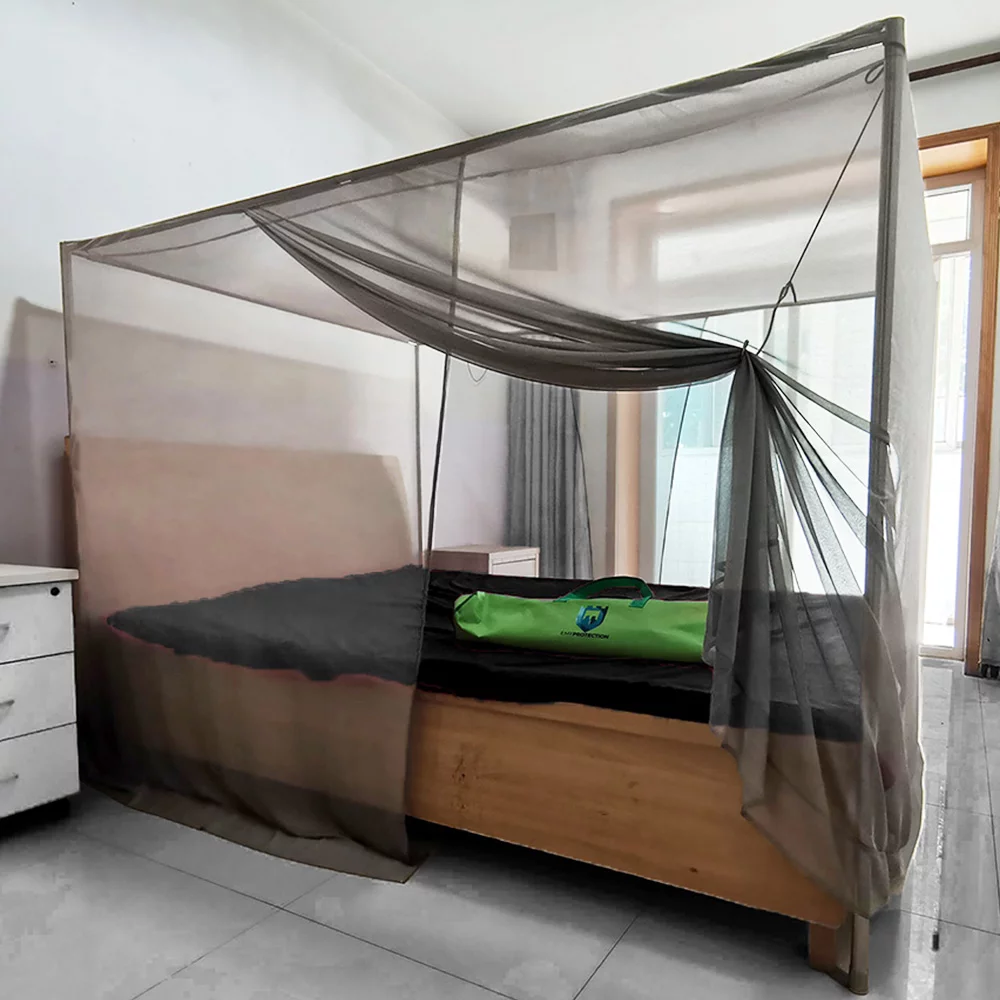
After installing EMF shielding paint, a bed canopy, or window film, the AM-11 provides clear before-and-after readings to confirm the attenuation achieved. Suitable for Building Biology assessors.
WiFi Router Distance Testing
Use the AM-11 to measure actual RF levels at different distances from your router and verify safe distance recommendations. See our WiFi router safe distance guide for reference values.
Pregnancy & Nursery Checks
The AM-11 is widely used by parents and midwives to verify nursery and bedroom RF levels before and after birth. See our pregnancy EMF guide for what levels to aim for.
Identifying Unknown Sources
The audio output allows you to walk through a room and identify sources by sound — particularly useful when a high reading is present but the source is not obvious (e.g. a neighbour's router through a wall, or a DECT base station in an adjacent room).
Honest Limitations of the AM-11
No consumer meter is perfect. The following limitations are worth understanding before purchase to ensure the AM-11 is the right tool for your needs:
- No ELF measurement — if your concern includes ELF magnetic fields from power lines, wiring, or appliances (relevant to the Li et al. miscarriage study), you need a separate gaussmeter alongside the AM-11.
- No data logging — readings cannot be exported or recorded automatically. You must note readings manually or video the display.
- No mmWave 5G coverage — the 8GHz ceiling misses mmWave 5G (24GHz+), though this is a minor limitation given current UK deployment patterns.
- Maximum reading 6 V/m — in very high-exposure environments (directly under a 4G mast at close range), the display maxes out. This is rarely an issue in domestic assessment contexts.
- No directional indication — the isotropic antenna gives no indication of which direction a signal is coming from. To locate a source, walk toward/away from it and watch the reading change.
What to Pair with the AM-11 for a Complete Assessment
For a comprehensive home EMF assessment covering both RF and ELF fields, pair the AM-11 with a dedicated ELF gaussmeter such as the Trifield TF2 or a single-axis fluxgate magnetometer. The AM-11 handles RF (WiFi, 5G, smart meters, DECT) while the gaussmeter covers ELF magnetic fields from wiring, appliances, and transformers. Together they cover the two field types most associated with health effects in the independent research literature.
Reading the AM-11 Against Building Biology Thresholds
The AM-11 displays readings in V/m (primary) and µW/m² (secondary). The Building Biology SBM-2015 sleeping area guidelines, which are widely used by independent EMF assessors, give the following thresholds for RF/microwave radiation:
| Building Biology SBM-2015 RF Exposure Levels (Sleeping Areas) | ||
|---|---|---|
| Level | µW/m² | V/m (approx.) |
| No Anomaly | < 0.1 | < 0.006 V/m |
| Slight Anomaly | 0.1 – 10 | 0.006 – 0.06 V/m |
| Severe Anomaly | 10 – 1,000 | 0.06 – 0.6 V/m |
| Extreme Anomaly | > 1,000 | > 0.6 V/m |
The AM-11's LED bar graph is calibrated to approximately these thresholds — green LEDs broadly correspond to the lower bands; orange and red LEDs indicate severe and extreme anomaly levels. Use the digital LCD for precise numerical comparison against these thresholds.
📡 Ready to Measure?
Compare the AM-11 with Other Expert-Recommended RF Meters
See how the AM-11 ranks in our full reviewed guide — and whether a different meter suits your specific testing needs better.
Read Full Meter Reviews → Browse All EMF Meters →Affiliate disclosure: We may earn a commission if you purchase via our links, at no extra cost to you.
References & Sources
- Acoustimeter Ltd. (2024). "AM-11 Product Specification Sheet." Available from: acoustimeter.com
- Building Biology Institute. (2019). "Building Biology Evaluation Guidelines for Sleeping Areas SBM-2015." IBN Standard.
- Philips, A. (Powerwatch). "Choosing an RF Meter." Available at: powerwatch.org.uk
- ICNIRP. (2020). "Guidelines for Limiting Exposure to Electromagnetic Fields." Health Physics, 118(5), 483–524.
- BioInitiative Working Group. (2020). "BioInitiative Report." Available at: bioinitiative.org