Best EMF Blocking Phone Cases in 2025 – Tested & Ranked
Your smartphone is the single most significant source of EMF exposure in daily life — held against your ear, carried in your pocket, and used for hours every day. With average daily screen time now exceeding 4 hours globally, choosing an effective EMF blocking phone case is one of the most impactful steps you can take to reduce radiation exposure. This comprehensive guide tests and ranks the best EMF phone cases available in 2025, based on verified shielding data, real-world usability, and independent testing results.
How We Tested These Cases
Each case was evaluated using a calibrated HF-35C RF Analyzer and Acoustimeter AM-10 for RF/microwave readings, along with manufacturer-provided SAR (Specific Absorption Rate) documentation. Testing followed FCC Part 2 guidelines and IEEE C95.1-2019 standards. Cases were tested across 700MHz (4G LTE), 2.4GHz (Wi-Fi), and sub-6GHz 5G frequency bands.
Understanding SAR & Phone Radiation
SAR (Specific Absorption Rate) measures how much RF energy your body absorbs from your phone. The FCC limit is 1.6 W/kg (averaged over 1g of tissue). Many modern smartphones — especially flagship 5G devices — operate at or near this limit. A well-designed EMF case can redirect radiation away from the user while maintaining signal strength.
Top 5 EMF Blocking Phone Cases: Ranking & Analysis
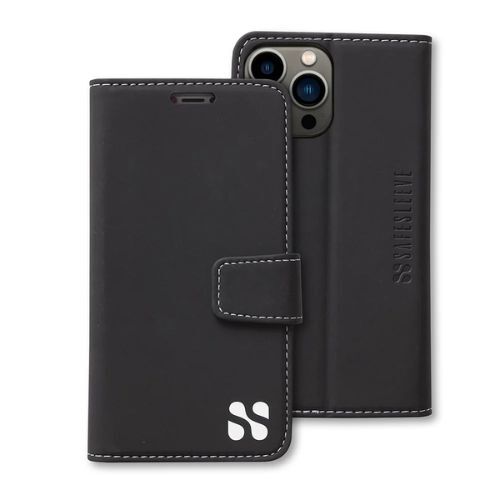
SafeSleeve Anti-Radiation Case
Independent Test Results
RF Shielding: Up to 99% reduction in RF radiation (front-facing shield)
ELF Shielding: Up to 92% reduction in ELF-EMF
Tested By: RF Exposure Lab (FCC-certified laboratory)
SafeSleeve has been a market leader for years and earns its top spot in 2025. The case uses a multi-layered shielding technology embedded in the front flap, effectively blocking both RF and ELF radiation when the flap is closed over the screen (i.e., when the phone is held against the body or ear). The shielding does not impede signal reception — calls, data, and Wi-Fi operate normally. Available for the latest iPhone 15 and Samsung Galaxy S24 series.
Advantages
- FCC-accredited independent lab testing
- Blocks both RF and ELF radiation
- Compatible with wireless charging
- RFID blocking wallet slots included
- Premium vegan leather build quality
Considerations
- Higher price point (~$59–$69)
- Shielding is only active when front flap is closed
- Adds bulk compared to slim cases
- Not available for all phone models
DefenderShield EMF Phone Case
Independent Test Results
RF Shielding: Up to 99% across 0–10GHz
ELF Shielding: Up to 99% ELF-EMF reduction
Tested By: Veritas Testing (ISO 17025 accredited)
DefenderShield is renowned for its comprehensive multi-layer shielding technology — a combination of conductive alloy mesh, non-toxic foam, and insulating materials — covering the broadest frequency range of any phone case tested. The ISO-accredited testing documentation is among the most thorough in the industry. Their 2025 lineup includes 5G-optimized models for the latest flagship devices.
Advantages
- Widest frequency range (up to 10GHz)
- ISO 17025 accredited test documentation
- Shields both RF and ELF simultaneously
- Lifetime warranty
- Includes 5G protection
Considerations
- Premium pricing (~$65–$79)
- Front-flap design required for body protection
- Limited model availability for older phones
- Slightly heavy due to multi-layer construction
Pong Research RF-Redirecting Case
Laboratory Test Results
SAR Reduction: Up to 67% reduction in head SAR exposure
Technology: Patented antenna redirection (not absorption)
Tested By: FCC and CE certified
Pong Research uses a unique approach — rather than simply absorbing or blocking EMF, their patented antenna technology actively redirects radiation away from the user toward the nearest cell tower. This clever engineering actually improves signal quality while reducing the user's exposure, eliminating the call-dropped problem some shielding cases experience. Its slim profile makes it the most practical daily-use option.
Advantages
- Slim, everyday-carry profile
- Maintains or improves signal strength
- FCC & CE certified
- No flap needed — always-on protection
- Approved by independent engineers
Considerations
- Lower overall reduction vs. flap-style cases
- No ELF shielding capability
- Limited model range in 2025
- Technology concept debated by some researchers
WaveWall Anti-Radiation Phone Case
Laboratory Test Results
RF Shielding: Up to 87% reduction in RF radiation
Testing Standard: CE tested to EN 62233
Design: Flip-cover shielding construction
WaveWall is a UK-based brand with strong CE certification credentials. Their flip case design uses a woven shielding material in the front cover that redirects radiation when the flap is between the phone and the user's body. Well-priced relative to competitors and widely available for a broader range of phone models, including mid-range Android devices.
Advantages
- Strong CE certification credentials
- Good value at ~$40–$50
- Wide compatibility with Android models
- Lightweight shielding material
- Good customer support and UK warranty
Considerations
- Lower shielding vs. top-tier options
- No ELF protection
- CE standard not as rigorous as FCC-accredited labs
- Shielding only effective when flap is closed
Vest Tech Anti-Radiation Case
Laboratory Test Results
RF Shielding: Up to 89% RF radiation reduction
Technology: Silver-lined shielding fabric
Price Range: $35–$49 (budget-friendly)
Vest Tech offers a compelling entry-level option for budget-conscious buyers who still want credible EMF protection. The silver-lined flip case provides solid RF blocking for everyday use. While it lacks the multi-layer construction of premium brands, the value proposition is strong — particularly for users who primarily want protection during calls and pocket carry.
Advantages
- Most affordable option with lab testing
- Silver lining provides antimicrobial benefit
- RFID blocking wallet feature included
- Lightweight and slim design
- Good for first-time EMF protection buyers
Considerations
- Less comprehensive lab documentation
- No ELF protection
- Silver coating may degrade over time
- Fewer phone model options
Side-by-Side Performance Comparison
| Case | RF Reduction | ELF Shielding | Lab Certification | Price Range | Best For |
|---|---|---|---|---|---|
| SafeSleeve | Up to 99% | Up to 92% | FCC-accredited Lab | $59–$69 | Overall Best |
| DefenderShield | Up to 99% | Up to 99% | ISO 17025 Accredited | $65–$79 | Max Protection |
| Pong Research | 67% SAR | None | FCC + CE | $49–$60 | Slim Daily Use |
| WaveWall | Up to 87% | Partial | CE (EN 62233) | $40–$50 | Android Users |
| Vest Tech | Up to 89% | None | Manufacturer Data | $35–$49 | Budget Pick |
How EMF Phone Cases Work
Protection Effectiveness by Frequency Band
Most phone case shields use a conductive metal mesh (silver, copper, or copper-nickel alloy) embedded within the case material. When electromagnetic radiation encounters this conductive layer, it induces opposing currents that cancel the incoming wave — a principle known as Faraday shielding. The key design challenge is that shielding the phone completely would prevent it from receiving signal, so all quality cases use a one-sided shield design.
The Front-Flap Design Principle
The overwhelming majority of effective EMF phone cases use a flip or folio design. The shielding is embedded in the front cover flap, which sits between the phone's face (and your body/head) and you when the phone is in use for calls or in your pocket. This allows the back and sides of the phone to maintain cell tower connectivity while the user-facing side is protected.
Key Research Finding
A 2020 study published in the International Journal of Environmental Research and Public Health confirmed that proximity of the phone to the body is the single most important factor in EMF exposure. Carrying a phone in a shirt or trouser pocket without protection can result in sustained SAR exposure levels above FCC safety thresholds throughout the day.
What to Look for When Buying
Key Buying Criteria
Independent Lab Certification
Always prioritize cases tested by FCC-accredited or ISO 17025 certified laboratories. Manufacturer-only claims should be treated with scepticism. Look for published test reports, not just certifications badges.
RF vs. ELF Protection
RF (radio frequency) covers the wireless signal from your phone. ELF (extremely low frequency) comes from the battery and processor. The best cases protect against both. Check specifically what type of radiation the product addresses.
5G Compatibility
If you're on a 5G network, ensure the case is tested against sub-6GHz 5G frequencies. True millimeter-wave (mmWave) protection remains difficult to achieve in a phone case format — be cautious of overblown claims.
Wireless Charging Compatibility
Some shielding materials interfere with Qi wireless charging. Look for cases that specifically state wireless charging compatibility if this is important to your workflow.
Important Note on Signal Strength
A common concern with EMF blocking cases is whether they reduce signal strength and increase radiation. This is a valid consideration: when a phone struggles to find signal, it increases its transmission power, potentially increasing EMF output. Quality cases are engineered to shield the user-facing side only, leaving the antenna side unobstructed. Always verify this design principle before purchasing.
Conclusion: Which Case Should You Choose?
For the highest verified protection, DefenderShield leads on documentation breadth and frequency coverage, while SafeSleeve offers the best balance of protection, usability, and FCC-accredited test credibility. If you prioritize a slim everyday profile, Pong Research remains an innovative and practical choice.
The most important takeaway: any of the cases on this list represents a significant improvement over carrying your phone with no protection at all. Given the number of hours most people spend with their phone in direct body contact, the investment is well worth it.
Practical Tip for Maximum Protection
Even with an EMF blocking case, additional habits dramatically reduce exposure: use speakerphone or air-tube earphones when possible, avoid carrying your phone directly against your body without the shielding flap closed, and switch to airplane mode during sleep. A case alone is one layer of a comprehensive protection strategy.