Power Lines and EMF: What Is a Safe Distance and What Does the Research Show?

Power lines — both high-voltage transmission lines and distribution lines — produce ELF (extremely low frequency) magnetic fields at 50Hz that extend for considerable distances from the cables. Unlike RF radiation, ELF magnetic fields pass through building walls with minimal attenuation, meaning distance is the primary protection. Understanding the research on ELF magnetic field health effects and knowing how to measure your exposure is essential for anyone living near overhead power lines.
ELF vs RF: A Different Type of EMF
Power line EMF is fundamentally different from the WiFi and mobile phone radiation discussed in most consumer EMF content. Power lines produce ELF magnetic fields at 50Hz — not radiofrequency radiation at GHz frequencies. These fields have different biological effects, are measured differently (gaussmeter or magnetometer, measuring in microtesla or milligauss rather than V/m or µW/m²), and require different protective strategies (primarily distance — shielding ELF magnetic fields requires highly specialised and expensive mu-metal shielding, not the carbon paint that blocks RF).
The Childhood Leukaemia Evidence
The most robustly replicated finding in all of ELF EMF health research is the association between residential proximity to high-voltage power lines and childhood leukaemia risk. Ahlbom et al. (2000) pooled nine studies and found a 2× increased childhood leukaemia risk at above 0.4µT average residential exposure — a result considered statistically robust across multiple research groups. Draper et al. (2005) extended this analysis to UK data, finding elevated leukaemia risk at distances up to 600 metres from 275kV and 400kV lines — well beyond the 0.4µT field contour, suggesting either an undetected mechanism or field measurement limitations in the earlier studies.
How to Measure ELF Magnetic Fields at Your Property
Use a single-axis or three-axis gaussmeter (also called a magnetometer or ELF meter). Suitable models include the Trifield TF2 (measures both RF and ELF), dedicated ELF magnetometers from Gigahertz Solutions, or similar instruments. Measure at multiple times of day — power line loads vary significantly between peak demand (7–9am, 5–8pm) and off-peak hours. The highest reading is the relevant comparison against health thresholds. Measure at ground floor, first floor, and in the bedroom of the property. Fields from overhead lines at distance decrease with the square of distance — measurements taken at the property boundary versus the centre of the building will be noticeably different for nearby lines.
🛡 Expert-Selected EMF Protection
Shop Verified EMF Protection Products
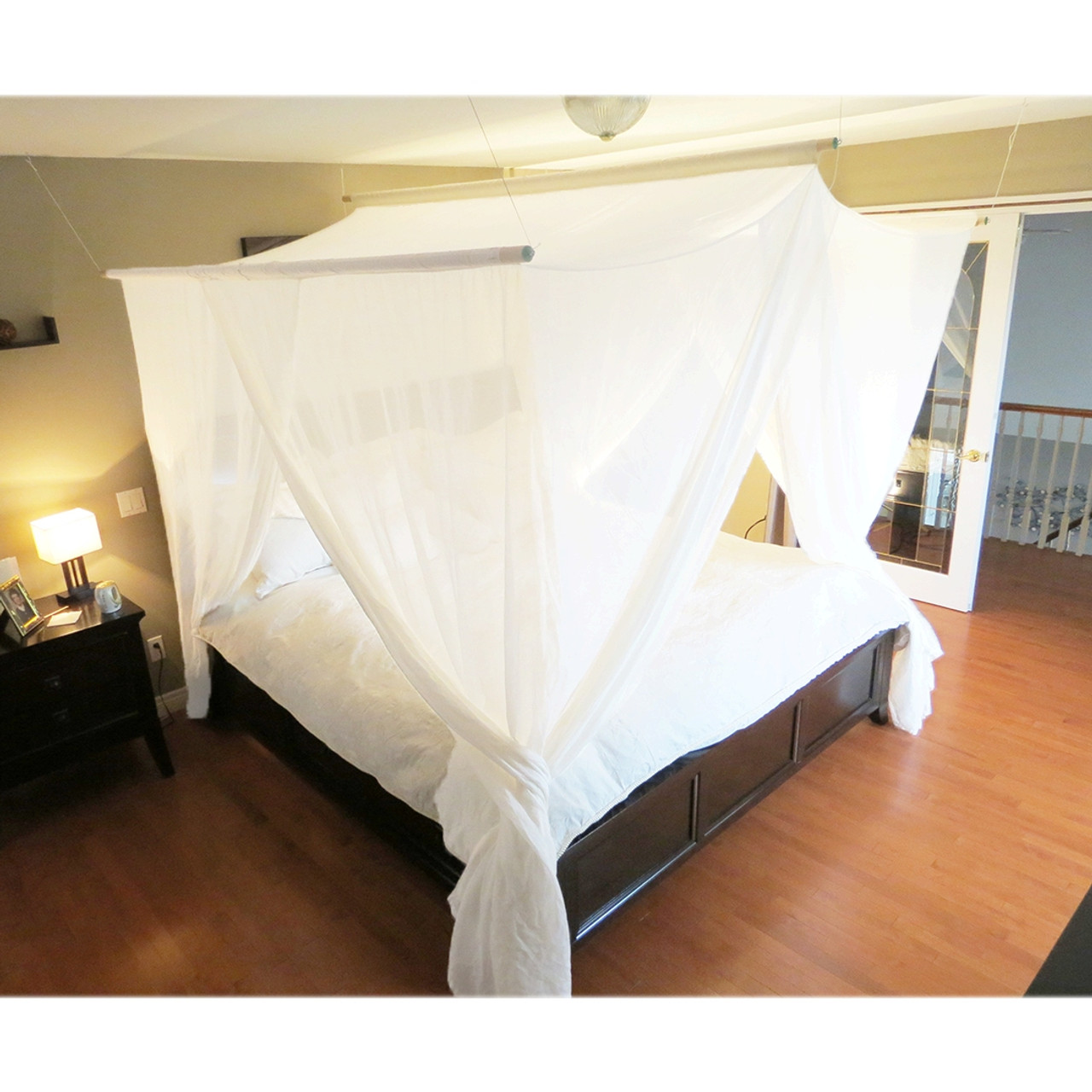
RF meters, shielding fabrics, Blushield devices, bed canopies, grounding products — all independently selected.
Related Questions
References
All research cited is from peer-reviewed journals, government agency publications, or formal scientific appeals. This page does not constitute medical advice. For health decisions, consult a qualified practitioner familiar with environmental medicine.
Related Products







Frequently Asked Questions
This is one of the longest-standing and most consistently replicated findings in EMF epidemiology. Ahlbom et al. (2000) published a pooled analysis of nine studies — the largest meta-analysis on power line proximity and childhood leukaemia at the time — and found a statistically significant 2× increased risk of childhood leukaemia in children living in homes with average ELF magnetic field exposure above 0.4 microtesla (µT). This result has been replicated in subsequent analyses. The IARC classified ELF magnetic fields as Group 2B possible carcinogens in 2001 — before its RF-EMF 2011 classification — primarily on the strength of this childhood leukaemia association.
There is no universally agreed 'safe distance' because ELF magnetic field levels depend on the line's voltage, the current load at the time of measurement, and local geography (the height of the cables, the span between poles). As a general guide based on published field measurement surveys: high-voltage transmission lines (275kV–400kV) may produce fields above 0.4µT at distances of 50–100 metres or more under peak load conditions; 132kV lines may produce such fields within 30–60 metres; 11kV distribution lines (the common wooden pole lines in residential areas) typically produce significant fields only within 5–15 metres. The only reliable way to determine your specific exposure is to measure with a gaussmeter at the property in question.
Underground cables are generally associated with lower ELF magnetic field levels at surface level than equivalent overhead lines, because the cables are closer to the ground (reducing distance to measurement points above) but also because the cable configuration in underground installations often results in better cancellation of opposing phase fields. However, some underground cable configurations produce surprisingly high surface magnetic fields — particularly where the cables are installed in non-optimal geometric arrangements. Underground cables should be measured rather than assumed safe — a gaussmeter measurement is the only reliable assessment.
The IARC/Ahlbom childhood leukaemia association was identified at levels above 0.4µT. Building Biology guidelines recommend sleeping area ELF magnetic fields below 20 nT (0.02µT) for 'no anomaly' conditions. The WHO/ICNIRP occupational limit is 1,000µT — set purely to prevent acute nerve stimulation. The gap between the ICNIRP limit (1,000µT) and the level at which epidemiological studies show childhood leukaemia associations (0.4µT) represents a 2,500× discrepancy — the same problem of thermal-only guidelines failing to protect against non-thermal biological effects that characterises the RF radiation debate.
In the UK, the National Grid Electricity Transmission and local distribution network operators are required to disclose EMF levels for overhead lines under the Electricity Act and related regulations. For new developments, Ofgem and local planning authorities have guidance on consultation with network operators regarding EMF. For existing properties, National Grid publishes EMF field calculation tools. In Scotland, the 2009 'right to buy' scheme allowed certain homeowners within 50 metres of high-voltage lines to sell to the government at pre-blight prices, though this scheme ended in 2014. Planning applications near high-voltage lines are typically flagged for EMF assessment. Consult a solicitor and a Building Biology consultant if purchasing a property near high-voltage infrastructure.