EMF-Shielded Room: How to Build a Faraday Room at Home

For people living near a cell tower, in a dense apartment block, or with severe EMF sensitivity, a bed canopy sometimes isn't enough — they want a whole room that's a genuine low-EMF sanctuary. That's an EMF-shielded room: a space turned into a partial Faraday cage so that radiofrequency radiation from outside is blocked before it reaches you. It's the most thorough form of home shielding, and done properly it's remarkably effective. This guide explains how it works, the materials you need for each surface, the mistakes that ruin the result, and — crucially — how to test that your room actually shields.
📋 In This Guide
What an EMF-Shielded Room Is
A Faraday cage is an enclosure of conductive material that blocks external electromagnetic fields. An EMF-shielded room applies the same principle to a bedroom or study: by making the walls, ceiling, windows and door reflect radiofrequency radiation, you create an interior where RF from towers, neighbours' Wi-Fi and smart meters is dramatically reduced. Shielding strength is measured in decibels (dB) of attenuation, and a well-executed room can block 99%+ of incoming RF.
🧱 Shield Every Surface
Shielding Paint, Fabric & Window Film
Everything to turn a room into a genuine low-EMF sanctuary.
The Six Surfaces to Treat
RF finds the path of least resistance, so shielding has to be continuous. Think of the room as six planes that must all be covered and joined:
- The four walls — especially any facing a tower or shared with a neighbour.
- The ceiling — important in apartments with transmitters above, or under a roof-mounted antenna.
- The floor — matters if the source is below (a router downstairs, or a ground-floor mast).
- Windows and the door — the classic weak points, treated separately (below).
Materials for Each Surface
- Walls & ceiling: RF shielding paint (conductive carbon or nickel paint) under your normal topcoat, or shielding fabric/wallpaper where painting isn't wanted.
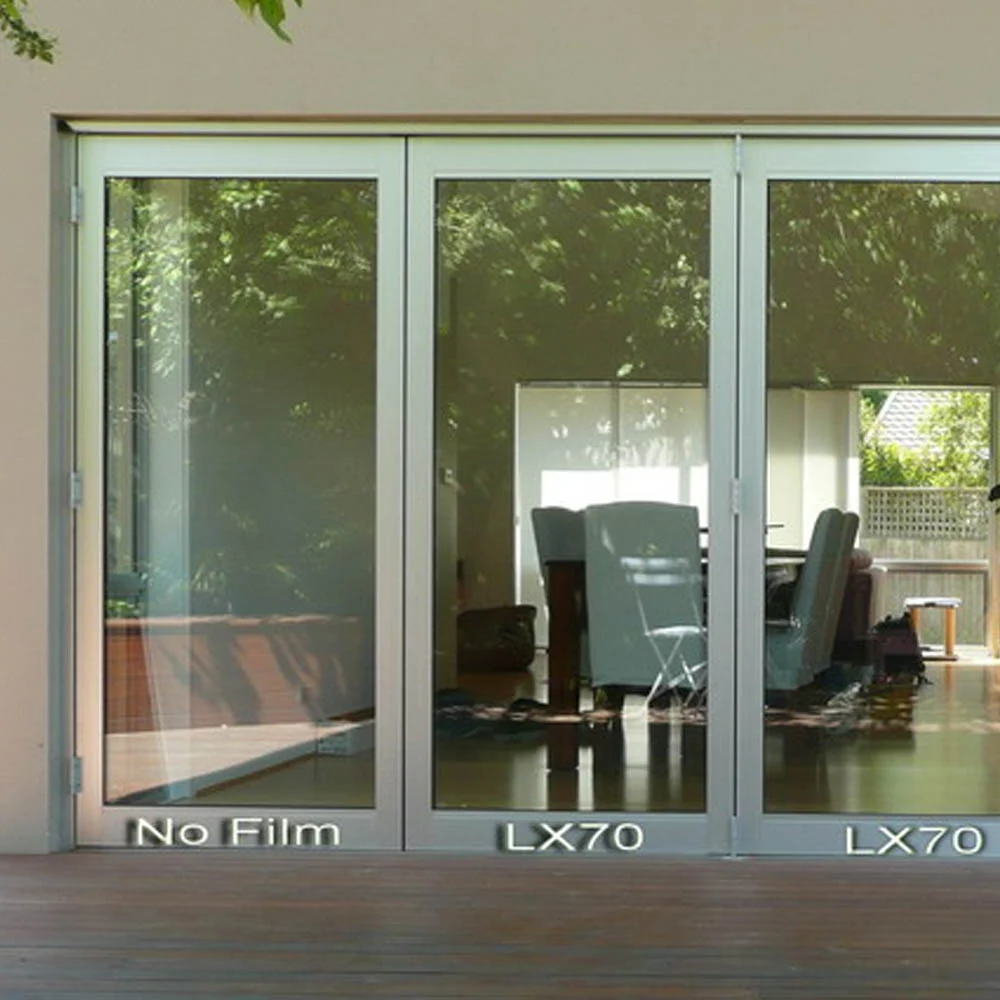
- Windows: transparent RF window film or shielding curtains — see our window film guide.
- Doors & gaps: conductive mesh, gasket or tape to seal the door edges and any service penetrations.
- Floor: shielding fabric or a shielding underlay where needed.
Match your materials on tested dB attenuation across the mobile, Wi-Fi and 5G bands. Our EMF blocking fabrics guide and shielding paint guide compare the options.
Grounding & Electric Fields
Shielding paint and conductive layers block RF whether grounded or not. But grounding those layers (with a proper grounding kit) also drains the low-frequency electric field, giving a quieter room electrically as well. Grounding must be done correctly and verified by measuring body voltage — see our grounding guide. In a shielded bedroom, grounding is often worth the extra step.
The Mistakes That Ruin It
One Gap Undoes Everything — and Watch Internal Sources
A shielded room is only as good as its weakest gap: an untreated window, an unsealed door, or a service hole will let RF flood back in. Seal every opening and leak-test with a meter. Second, remember a shielded room reflects RF both ways — so any transmitter left inside (a phone not in airplane mode, a smart speaker, a cordless base) gets trapped and amplified. Remove internal sources, then measure. These are the same two rules as our window and canopy guidance.
How to Build & Test It — Step by Step
Measure the Baseline
Record RF readings around the room first, so you know your worst walls/windows and can prove the improvement. See our meter guide.
Coat Walls & Ceiling
Apply shielding paint (usually two coats) or fix shielding fabric, overlapping edges so the conductive layer is continuous.
Treat Windows & Doors
Add RF film or shielding curtains to glass; seal the door with conductive gasket/mesh. These are where most leaks hide.
Ground the Conductive Layers
If reducing electric fields too, ground the paint/fabric with the correct kit and verify body voltage drops.
Remove Internal Sources & Leak-Test
Switch off/remove all wireless devices inside, then sweep the room with the meter. Chase down any gap until the interior reads consistently low.
🛡️ Build Your Sanctuary
Shop Shielding Paint, Fabric & Film
All the materials and meters to shield and verify a whole room.
Shop at emf-protection.co.uk →Affiliate disclosure: We earn a small commission on purchases via this link — at no extra cost to you.
Frequently Asked Questions
Can you shield a whole room from EMF?
Yes — treating all surfaces (paint/fabric on walls and ceiling, film/curtains on windows, mesh on doors and gaps) creates a partial Faraday cage blocking most RF. Measure the dB result with a meter.
What materials do I need?
RF shielding paint or fabric for walls/ceiling, RF window film or shielding curtains for glass, and conductive mesh/tape to seal doors and gaps. Grounding is often recommended.
Does shielding paint need grounding?
Not to block RF, but grounding it also reduces electric fields. Use the proper kit and verify body voltage.
How do I know it works?
Measure with an RF meter before and after and leak-test every surface, window and door. A single gap can undo the whole room.






.webp)